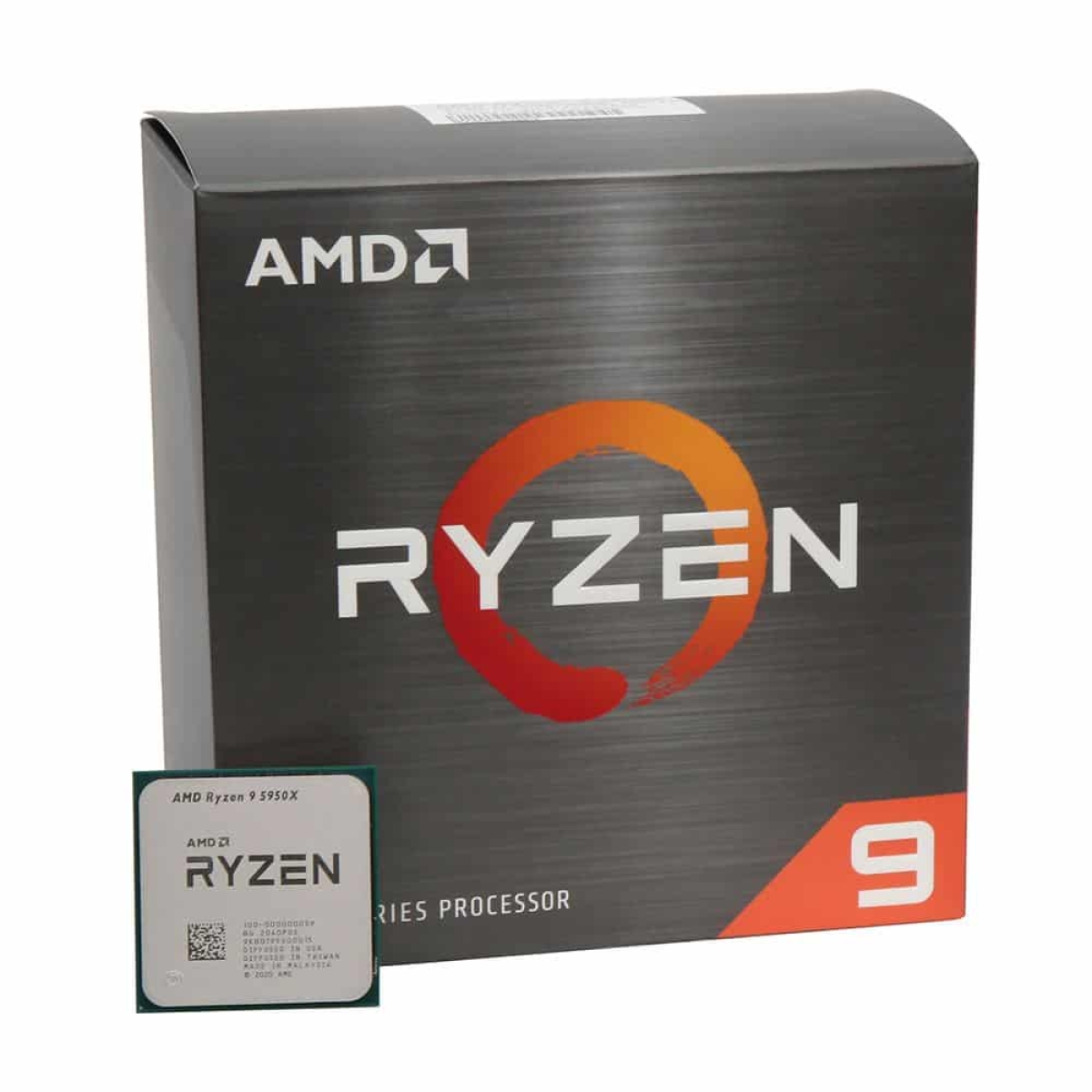
Ryzen 9 5950X–based VDS solutions are often marketed as “high-performance virtual servers.” However, in practice, they are not the right choice for every project. In this article, we clearly explain which scenarios a Ryzen 9 5950X VDS is suitable for and where it becomes an unnecessary or incorrect investment.
What Is Ryzen 9 5950X and Why Is It Popular?
The Ryzen 9 5950X stands out with its high clock speeds and strong single-core performance. In virtual server environments, it delivers noticeable advantages for workloads that require fast CPU response times. That said, performance does not depend solely on the processor. Infrastructure planning and resource allocation are equally critical.
Use Cases Where Ryzen 9 5950X VDS Makes Sense
High CPU Clock Speed Requirements
Projects that rely on single-core performance or require high processing power in short bursts benefit significantly from Ryzen 9 5950X. In such cases, systems with many cores but lower clock speeds often fail to deliver the expected performance.
Typical examples include:
Websites with Traffic Spikes
Websites experiencing sudden increases in traffic often suffer performance drops because the server cannot handle peak loads. A properly configured Ryzen 9 5950X VDS can manage these spikes more effectively and maintain stable response times.
The key factor here is avoiding CPU overcommitment. Even powerful hardware becomes ineffective if resources are oversold.
Game Servers (With Proper Configuration)
Game servers usually demand high clock speeds rather than a large number of cores. For this reason, Ryzen-based VDS solutions are commonly preferred. However, if too many virtual servers are hosted on the same node, latency and lag become inevitable.
In such cases, the issue lies in infrastructure management, not the processor itself.
Use Cases Where Ryzen 9 5950X VDS Is Not Ideal
Storage and Backup Purposes Only
For file storage, backup, or archival tasks, high CPU power is unnecessary. Using a Ryzen 9 5950X VDS in these scenarios leads to inefficient cost usage.
Projects with Low CPU Utilization
Some workloads place minimal demand on the CPU while relying more on RAM or disk performance. In these cases, a more balanced and cost-effective server configuration is a better choice.
Oversold Shared Infrastructure
If a Ryzen 9 5950X node is overloaded with too many virtual servers, performance expectations will not be met. Most performance issues originate from overselling rather than hardware limitations.
Who Should Not Choose a Ryzen 9 5950X VDS?
This server type may not be suitable for users who:
-
Prioritize the lowest possible price
-
Do not require guaranteed resources
-
Have no need for high burst performance
Such users often end up dissatisfied with high-end server solutions.
What Defines a Proper Ryzen 9 5950X VDS?
Before choosing a Ryzen 9 5950X VDS, the following points should be clearly verified:
-
Whether CPU overcommitment is applied
-
The number of virtual servers per node
-
Availability of real uptime statistics
-
Performance stability during peak hours
Without these factors, hardware specifications alone provide little value.
Conclusion
A Ryzen 9 5950X VDS delivers excellent performance when used for the right workloads. When chosen incorrectly, however, it results in unnecessary costs and unmet expectations. Server selection should be based on actual usage requirements rather than marketing labels.
Ryzen 9 VDS solutions and infrastructure details can be reviewed through the relevant VDS category pages and uptime status pages.

 Turkey (Türkçe)